Introduction to Hearts
Hearts is a classic trick-taking game in which players generally try to avoid taking tricks containing heart cards or the Queen of Spades. However, there’s a twist—players can attempt to “shoot the moon,” capturing all hearts and the Queen to drastically shift the game in their favor. For newcomers, we’ve included links to rules in our previous blog post, and at the end of this article, you’ll find recommended resources to sharpen your strategy.
Introduction to Castlore: Inspired by Hearts
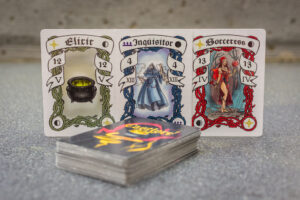
Our game Castlore draws inspiration from Hearts, particularly in the Poison spell mechanic. In Castlore, players holding an Elixir card can cast Poison, turning it into a “Queen of Spades” equivalent for opponents. Casting Poison can help players earn Crystals (the key to winning), but taking a trick containing their Elixir leads to Crystal loss.
In this post, we’ll cover key Hearts strategies that can also enhance your Castlore play.
1. Card Counting in Hearts
Card counting in Hearts means keeping track of high-risk cards, such as the Queen of Spades and hearts, to make more informed decisions about which suits to lead or avoid.
Track the Queen of Spades
This is the game’s most dangerous card. If it hasn’t been played by mid-game, stay cautious with spades, as opponents may try to unload the Queen onto you.
- Example 1: In a round with multiple low spades, if you’re holding the Ace, play cautiously, as someone may be setting up to trap your Ace with the Queen.
- Example 2: If you’re still holding high spades and several low spades have been played, avoid leading with a spade to prevent taking the Queen.
- Example 3: Once the Queen is played, spades become safer for leading without risk of points.
Watch for Hearts in Play
Tracking hearts helps you identify if someone is attempting to shoot the moon, letting you disrupt their plan.
- Example 1: If no hearts have appeared by round six, someone might be attempting to collect all hearts.
- Example 2: Play a low heart if possible, forcing the potential moon-shooter to reveal their intentions.
- Example 3: As low hearts are played, holding high hearts becomes safer to avoid later-point rounds.
Identify Patterns in Play
Observing suit leads can reveal potential voids and help you predict high-risk plays.
- Example 1: If a player frequently leads with clubs, they may be void in hearts or spades.
- Example 2: If someone stops leading a suit they previously favored, they may now be void in that suit.
- Example 3: Avoiding spades consistently may indicate that someone is holding the Queen, potentially setting a trap.
Castlore Connection: In Castlore, tracking opponents’ Elixirs offers similar advantages, allowing you to time Poison spells for optimal Crystal management.
2. Using Void Suits in Hearts
Creating void suits allows you to avoid dangerous cards by discarding them on other players’ tricks.
Develop Voids to Offload Hearts
Having a void suit enables you to discard high-point cards safely.
- Example 1: Discard low diamonds early to create a void, setting up future opportunities to discard hearts.
- Example 2: If you hold the Queen, creating a spade void can let you pass her to another player.
- Example 3: Establishing a void before hearts are broken gives you freedom to discard points once hearts enter play.
Avoiding the Queen Trap
Being void in spades allows you to set up other players to take the Queen.
- Example 1: If you’re void in spades, lead with diamonds to tempt someone with the Queen to play it.
- Example 2: Lead non-spades if a player avoids spades, baiting them into playing the Queen.
- Example 3: Lead high spades if you suspect a player is avoiding spades, forcing their hand.
Shooting the Moon Strategy
Voids help you control when you play high cards, supporting a moon-shot attempt.
- Example 1: Voiding spades early allows control over hearts without risking the Queen.
- Example 2: Voiding diamonds gives flexibility to discard hearts if necessary.
- Example 3: With control over high hearts, you can hold back points, maximizing your chance to shoot the moon.
Castlore Connection: Voids in Castlore facilitate effective Poison spells, enabling players to manage Crystal gains and minimize risks.
3. Basic Strategies
These beginner strategies lay a foundation for effective gameplay in Hearts.
A. Leading Low Cards Early
Starting with low cards allows you to assess opponents’ strategies and reduces trick-taking risks.
- Example 1: Lead with a low diamond to observe reactions and avoid taking points.
- Example 2: Play a low club to test if players are dodging certain suits.
- Example 3: Leading low spades, especially early, can reveal the Queen’s location.
B. Balancing Points and Control
Strategically taking a few points can prevent larger losses, giving you control over game flow.
- Example 1: Take a low heart if it lets you avoid taking the Queen later.
- Example 2: Intentionally take a low-point trick to avoid higher-risk rounds.
- Example 3: Collect minor points to avoid potentially larger point loads in the future.
C. Breaking Hearts Wisely
Breaking hearts wisely introduces point cards gradually, allowing for strategic control.
- Example 1: Break hearts with a low heart to force points into play early.
- Example 2: Delay breaking hearts until you’ve discarded high hearts to minimize risk.
- Example 3: Break hearts if someone is attempting to shoot the moon, reducing their control.
D. Observing Discards
Pay attention to what opponents discard, as it reveals their strengths and weaknesses.
- Example 1: Frequent club discards may indicate a void in another suit.
- Example 2: Early high-card discards can suggest a low-heart strategy.
- Example 3: If someone avoids discarding hearts, they may be setting up for a moon shot.
E. Using High Cards to Control Tricks
Playing high cards strategically can shift control, preventing unwanted point accumulation.
- Example 1: Lead with a high club to force someone to take the lead.
- Example 2: Hold high diamonds to avoid early hearts, then play them to pass the lead.
- Example 3: Playing an Ace in spades after the Queen is revealed offers safe control.
F. Early Game Suit Development
Playing selective suits early helps build voids, preparing for heart discards.
- Example 1: Discard low clubs to work toward a void.
- Example 2: Lead diamonds if you’re holding a few, aiming to void the suit.
- Example 3: Set up low cards in certain suits to enable flexible plays in later rounds.
4. Intermediate Strategies
These strategies allow for enhanced control and prediction of opponents’ moves.
G. Controlling Lead with Mid-Range Cards
Using mid-range cards (8s, 9s, and 10s) helps you control the lead without taking points.
- Example 1: Play a 9 of diamonds to manage lead shifts without winning the trick.
- Example 2: Use a 10 of clubs strategically to pass the lead.
- Example 3: Lead mid-range hearts to avoid high hearts once hearts are broken.
H. Setting Up Plays with High Cards
Holding and playing high cards at key times allows control over who leads next.
- Example 1: Hold the King of Spades if you suspect the Queen, baiting a lower play.
- Example 2: Use high diamonds to keep hearts out as long as possible.
- Example 3: Lead a King to prevent heart plays and guide the round’s outcome.
I. Breaking Hearts to Pressure Moon Shooters
Break hearts early to disrupt moon shooters, forcing unwanted point collection.
- Example 1: Lead a heart once hearts are broken, exposing potential moon-shooters.
- Example 2: Break hearts with high hearts, limiting moon-shot chances.
- Example 3: Leading a low heart blocks a player’s high-heart play, increasing their points.
5. Advanced Techniques
These high-level strategies require prediction and risk management.
J. Setting Up Opponents to Take Points
Manipulate the game to make others take unwanted points by playing specific cards.
- Example 1: Lead a high spade, tempting someone to play the Queen and take points.
- Example 2: Play high clubs to block opponents from unloading hearts onto you.
- Example 3: Use a high diamond lead to keep hearts in play, redirecting points to others.
K. Bluffing with High Cards
Bluffing can mislead opponents, making them believe you’re in a different position than you are.
- Example 1: Play a high card to make others think you’re targeting a trick, altering their play.
- Example 2: Hold back a high heart to suggest you’re avoiding hearts.
- Example 3: Play high spades to imply you’re prepared for the Queen, shifting opponents’ focus.
L. Strategic Heart-Saving for Later Rounds
Holding hearts can influence later rounds by controlling heart entry points.
- Example 1: Retain low hearts to prevent early exposure, maximizing discard potential.
- Example 2: Play mid-range hearts only when multiple high hearts have been played.
- Example 3: Hold high hearts to control point accumulation, blocking opponents’ moves.
M. Forcing Plays by Analyzing Opponent Voids
Predict opponents’ voids and force them into taking tricks with their weaknesses.
- Example 1: If someone avoids spades, lead with them to force a point-laden play.
- Example 2: Consistent club play may indicate avoidance, setting up forced heart play.
- Example 3: Lead a suspected void suit to make them play high-point cards.
Resources to Master Hearts
Books
- Play Winning Hearts by Joseph Andrews – Offers guidance on avoiding points, shooting the moon, and controlling voids.
- The Complete Guide to Winning Hearts by Tony Karpinski – Covers everything from basics to advanced trick management, with a focus on void strategies.
Online Resources
- Heartschallenge.com – Online Hearts with customizable difficulty for practicing advanced techniques.
- CardzMania’s Hearts section – Practice with different levels and a “hints” feature, great for learning high-level play.
Conclusion
Whether you’re mastering Hearts or preparing to join us for a Castlore playtest, these strategies will elevate your game. By blending foundational tactics with intermediate and advanced techniques, you’ll gain control over trick-taking rounds, anticipate opponents’ moves, and maximize your winning potential. Good luck, and we hope these strategies add depth to your next game!